From festive wedding celebrations to intimate cultural gatherings, body adornment has always been a profound medium for storytelling. Among the world’s oldest and most beloved forms of temporary body modification, henna art—also widely known as mehndi—holds a magical, timeless appeal. The delicate swirl of a cone, the rich aroma of eucalyptus and tea tree oils, and the deep, rich stain left behind on the skin are experiences that span across generations and continents.
While the versatility of this plant-based paste allows for endless creativity, getting a flawless look can come with unexpected challenges. Many enthusiasts struggle with watery pastes, shaky lines, or a stain that turns out a faint, disappointing orange rather than a deep, rich mahogany. Even worse, the modern marketplace is flooded with toxic “chemical cones” that can cause severe skin reactions and chemical burns.
If you are caught between wanting an intricate, breathtaking pattern and worrying about application mistakes or skin safety, you are in the right place. This comprehensive guide uncovers 10 gorgeous henna art styles, breaking down exactly who each pattern suits best, how to wear them, and how to maximize your stain longevity using entirely natural, organic methods.
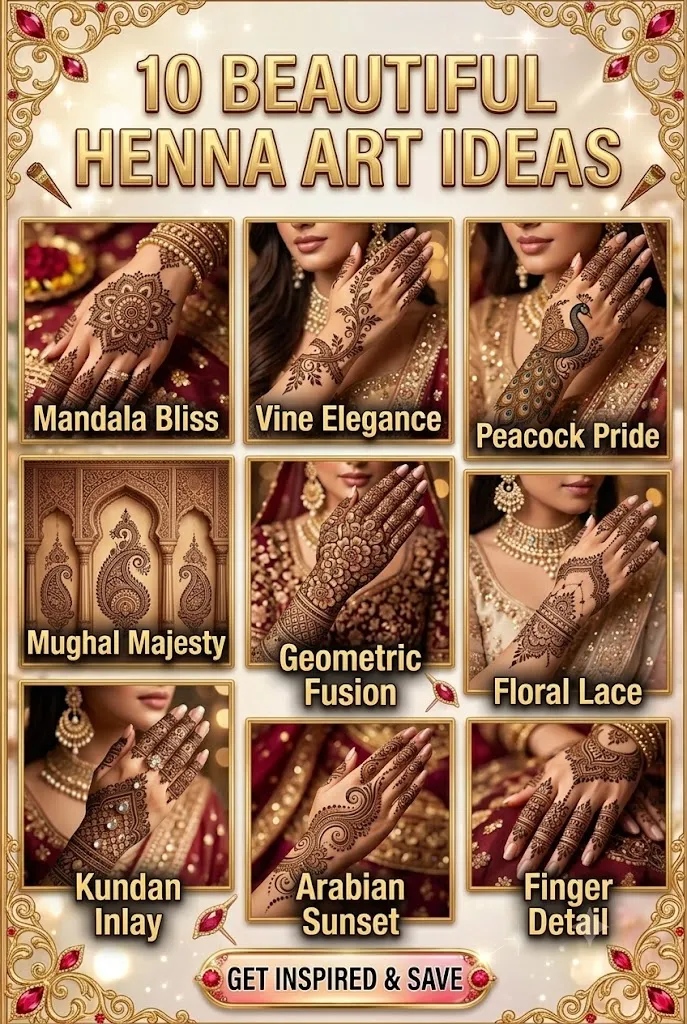
The Ultimate Henna Comparison Table: Styles at a Glance
Before exploring each distinct design aesthetic, let us look at how the different regional and modern styles compare in terms of application time, design complexity, and typical drying requirements.
| Design Aesthetic | Application Time | Complexity Level | Drying & Aftercare Needs | Best Suited For |
|---|---|---|---|---|
| 1. Traditional Indian Bridal | 3–6 Hours | High | Very High (Requires 8+ hours) | Brides and major formal festivals |
| 2. Minimalist Mandala | 15–30 Minutes | Low | Low (Dries quickly) | Everyday elegance & beginners |
| 3. Bold Arabic Floral | 30–60 Minutes | Medium | Medium (Thicker paste lines) | Festive parties & modern celebrations |
| 4. Intricate Pakistani | 2–4 Hours | High | High (Dense patterns) | Eid festivals and formal guests |
| 5. Geometric Moroccan | 45–90 Minutes | Medium to High | Medium | Men’s henna, minimalist lovers |
| 6. Delicate Gulf Khafeef | 1–2 Hours | High | High (Fine line work) | Contemporary chic statements |
| 7. Elegant Jewelry Style | 20–45 Minutes | Medium | Low to Medium | Accenting formal outfits & rings |
| 8. Western Fusion Botanical | 30–60 Minutes | Low to Medium | Low | Casual wear, festivals, and holidays |
| 9. Royal Rajasthani Mesh | 2–4 Hours | High | Very High | Ultimate classic bridal aesthetics |
| 10. Modern Minimalist Cuffs | 15–30 Minutes | Low | Low | Sleek, office-friendly style |
10 Incredible Henna Art Styles
1. Traditional Indian Bridal Style
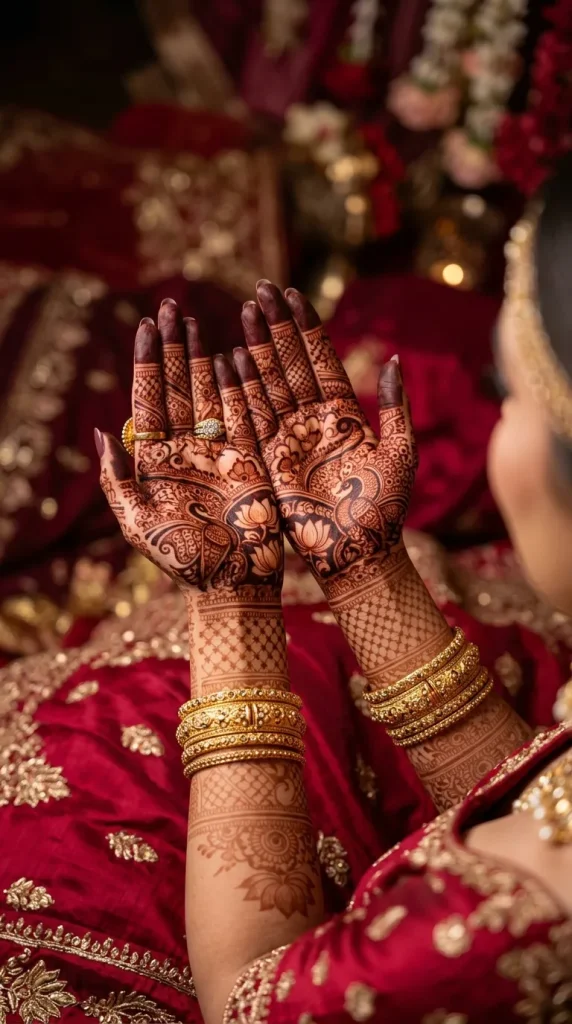
This style is the epitome of maximum luxury and storytelling in henna art. It typically covers the entire hand, stretching well past the forearms, and features incredibly dense, delicate patterns mixed with symbolic figures like peacocks, lotus blossoms, doli carriages, and intricate portraits of the bride and groom.
- Who It Suits Best: Intended primarily for brides or anyone celebrating a milestone life event who wants to embrace the deepest roots of cultural tradition.
- Styling Tips: Coordinate the patterns with your bridal jewelry, leaving small windows of negative skin space to let heavy stone rings stand out cleanly.
- Benefits: Offers an unmatched, jaw-dropping visual impact that serves as a beautiful photographic centerpiece for wedding festivities.
2. Minimalist Mandala Style
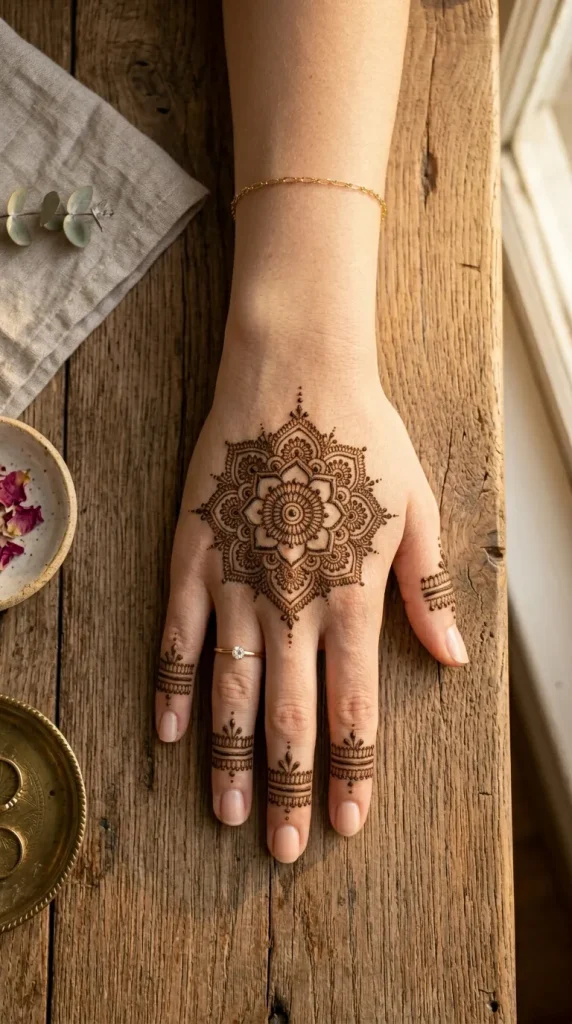
Centered around a single, perfectly balanced circular motif in the exact middle of the palm or the back of the hand, this look uses symmetry to capture the eye. The fingers are typically adorned with matching simple bands or caps to complete the geometric harmony.
- Who It Suits Best: Perfect for beginners, busy individuals who cannot sit still for hours, or anyone looking for a clean, meditative, and sophisticated accent piece.
- Styling Tips: Keep the center circle crisp and bold. Pair this design with stacked minimalist silver rings to draw attention to the hand’s central alignment.
- Benefits: Fast installation time, exceptionally easy to dry without accidental smudging, and leaves elegant negative space around the wrist.
3. Bold Arabic Floral Style
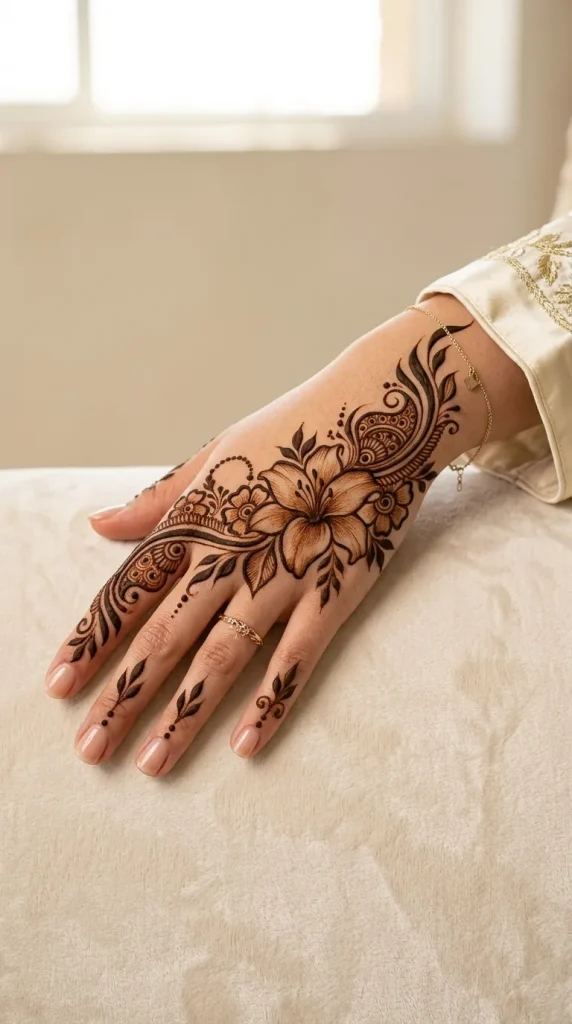
Characterized by thick, flowing vines, oversized floral patterns, and leafy trails that cascade diagonally across the hand, this style stands out for its deliberate contrast between heavily shaded petals and bare skin.
- Who It Suits Best: Those looking for a modern, high-fashion statement that looks outstanding at casual evening parties and formal dinners alike.
- Styling Tips: Use a slightly larger cone opening to achieve those thick, glossy outlines. Let the design flow from the index finger down to the opposite side of the wrist.
- Benefits: Quick application process that doesn’t feel heavy or restrictive on the skin, resulting in an exceptionally bold, photogenic stain.
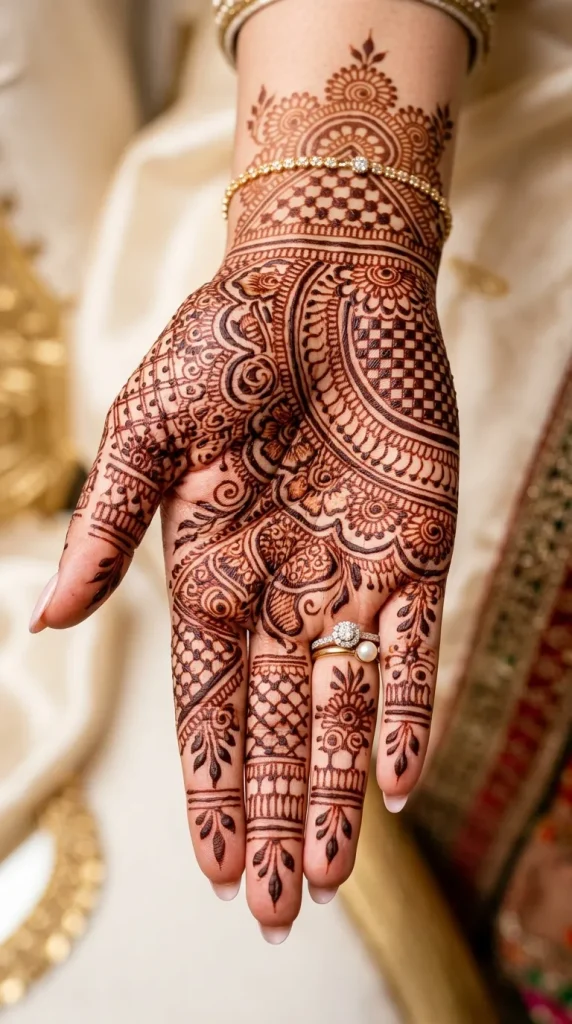
4. Intricate Pakistani Style
A gorgeous hybrid aesthetic that bridges the gap between bold Arabic flows and dense Indian filling techniques. It utilizes ultra-fine line work, delicate lace glove patterns, micro-shading, and highly detailed paisleys that cover the skin like a second glove.
- Who It Suits Best: Ideal for festive holiday occasions like Eid, or close family members of a wedding party who want an elegant, detailed look.
- Styling Tips: Ensure your artist uses a fresh, fine-tipped organic cone to prevent the delicate lines from bleeding together into a solid blur.
- Benefits: Creates an incredibly delicate, fabric-like finish on the skin that develops an exceptionally dark, multi-dimensional mahogany stain.
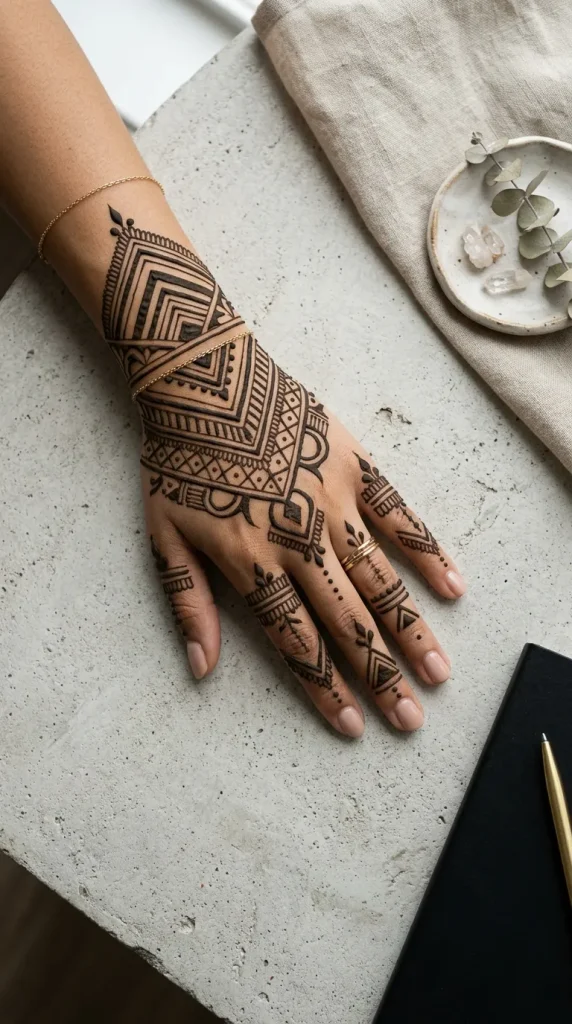
5. Geometric Moroccan Style
Breaking away from traditional floral swirls, this African-inspired aesthetic relies heavily on straight lines, perfect right angles, chevrons, triangles, and abstract tribal grids. It feels incredibly modern, structural, and architectural.
- Who It Suits Best: Universally flattering, but highly favored by those who prefer edgy, non-traditional aesthetics, as well as men’s grooming traditions.
- Styling Tips: Use a fine-tooth comb or a steady grid layout guide during application to keep the parallel lines perfectly sharp and uniform.
- Benefits: Highly unconventional appearance that pairs beautifully with western clothing, casual wear, and minimalist personal styles.
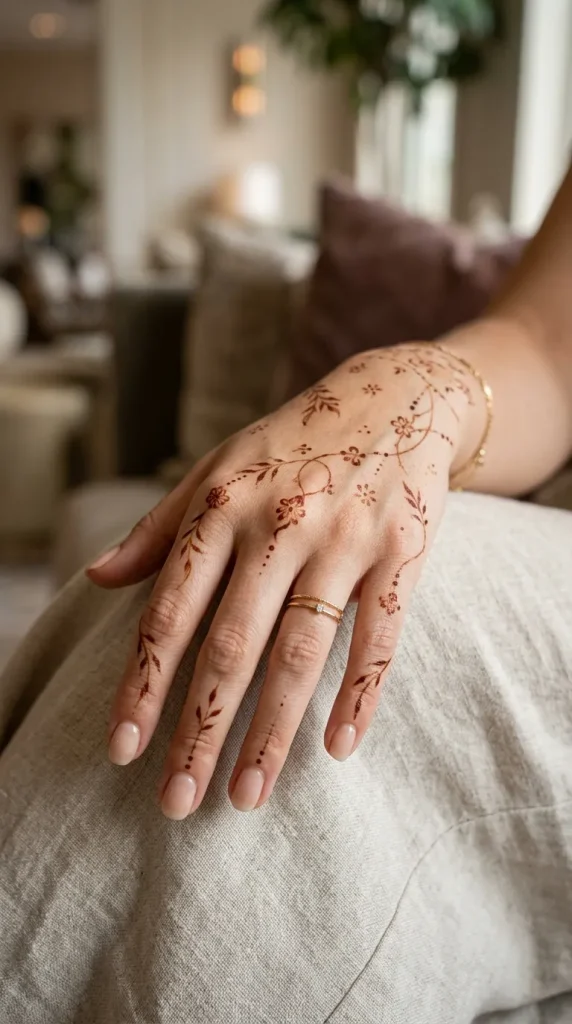
6. Delicate Gulf Khafeef Style
“Khafeef” translates to light or delicate, and this style lives up to its name perfectly. Originating from the Arabian Gulf region, it features floating, disconnected motifs, tiny delicate florets, and micro-dots scattered gracefully across the fingers and wrists with ample skin showing through.
- Who It Suits Best: Fashion-forward women who want a touch of cultural art without covering their entire hand in dark paste.
- Styling Tips: Focus the design heavily on the fingertips, using ultra-fine lines that resemble delicate lace embroidery or fine tattoos.
- Benefits: Extremely lightweight feel on the skin, fast drying time, and provides an air of effortless, contemporary elegance.
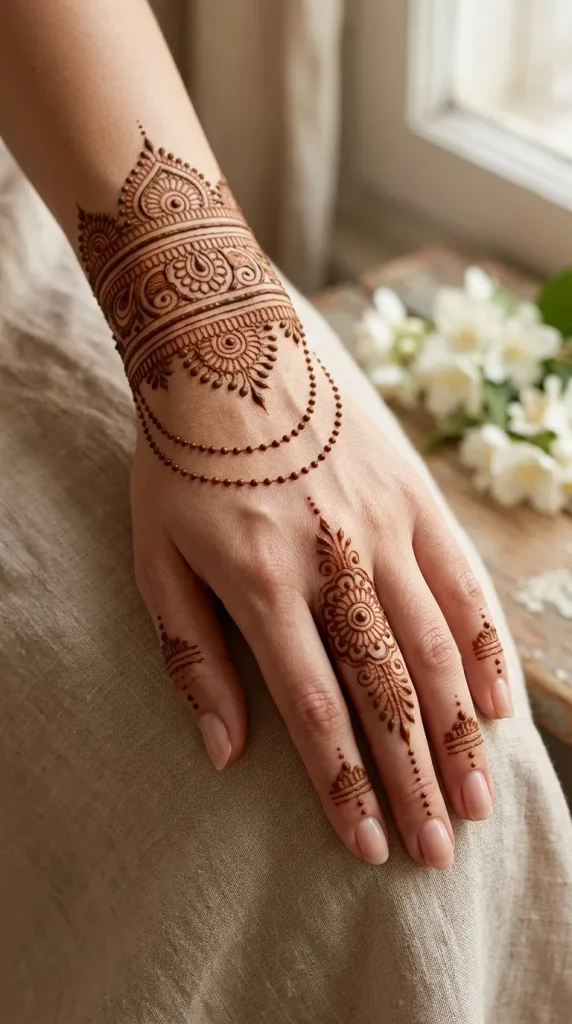
7. Elegant Jewelry Style
This clever style mimics the physical placement of hand jewelry, such as elaborate rings, delicate chain bracelets, or ornate bridal hand flowers (haathphool). It leaves the majority of the hand bare, focusing only on thin, ornamental bands around the fingers and a structural cuff around the wrist connected by single-dot chains.
- Who It Suits Best: Women who prefer accessories but want to skip heavy metal pieces for a summer evening, or anyone looking for a subtle, clever conversational accent.
- Styling Tips: Apply the paste to mirror actual bracelet draping. Pair it with a fresh, nude manicure to keep the focus entirely on the faux-jewelry art.
- Benefits: Uses very little product, dries in minutes, and acts as a gorgeous, zero-maintenance accessory that won’t snag on clothing.
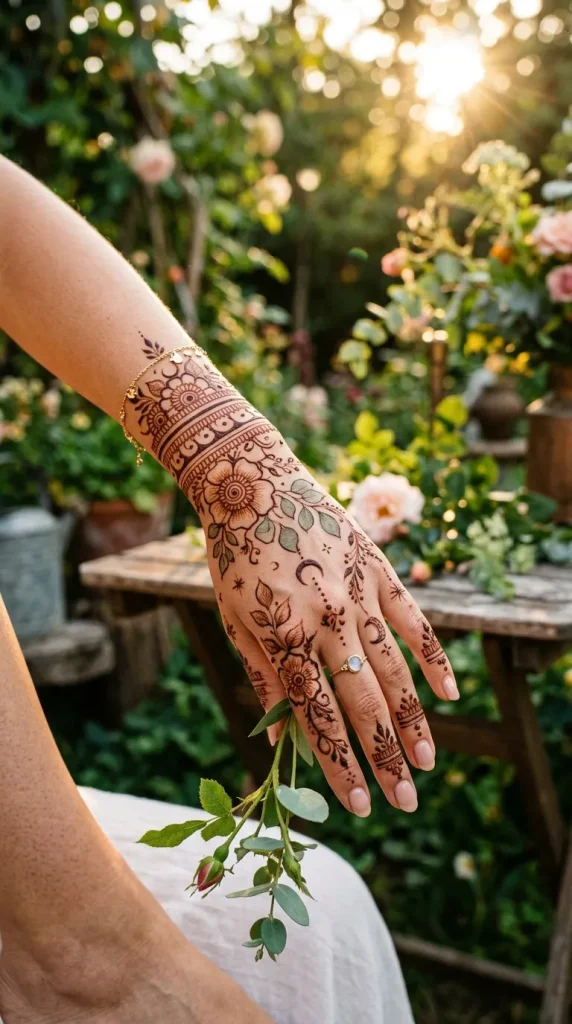
8. Western Fusion Botanical Style
A beautiful contemporary blend that incorporates whimsical western illustration styles, such as realistic wild roses, trailing ivy leaves, eucalyptus sprigs, and crescent moon phases. It avoids traditional abstract fills, treating the skin like an illustrator’s sketchpad.
- Who It Suits Best: Nature lovers, festival-goers, or anyone exploring henna art for the first time outside of its traditional wedding contexts.
- Styling Tips: Let the botanical elements wrap organically around the wrist like a growing vine, keeping the line weights soft and variable.
- Benefits: Offers total creative freedom without rigid design rules, making it an incredibly fun, relaxed, and experimental style.
9. Royal Rajasthani Mesh Style
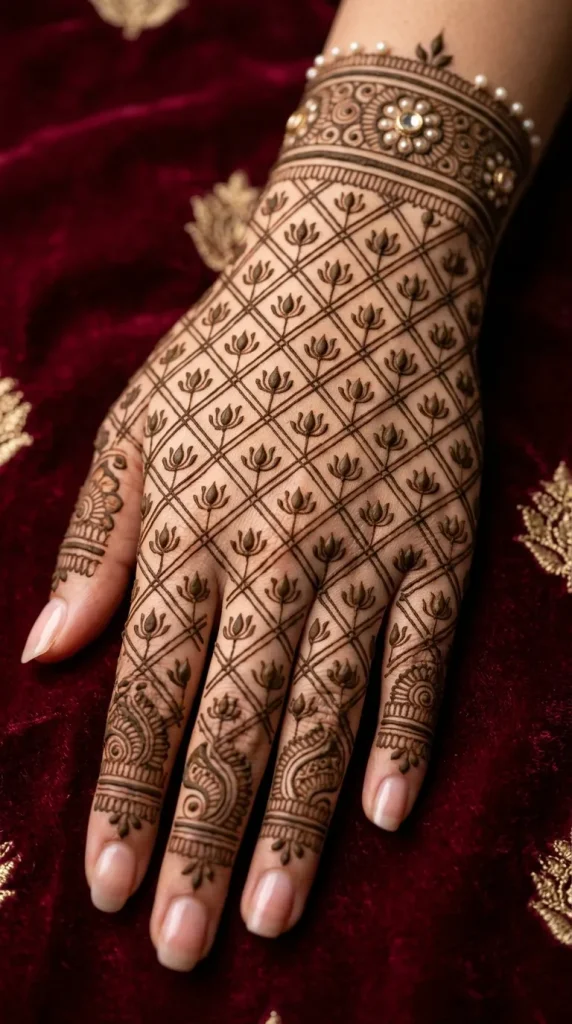
This ancient, regal style focuses entirely on flawless symmetry and breathtaking jaal (net/mesh) patterns. The hands are transformed into intricate lace gloves through crisscross grids, with tiny lotus buds or dots nestled perfectly within each microscopic square.
- Who It Suits Best: True connoisseurs of classical art forms who appreciate intense symmetry and high levels of technical perfection.
- Styling Tips: Sit in a comfortable, well-lit space for application, as this technique requires a highly stable hand and a slow, rhythmic pace.
- Benefits: The uniform distribution of paste ensures a perfectly even, incredibly dark, and uniform color payoff across the entire surface of the skin.
10. Modern Minimalist Cuff Style
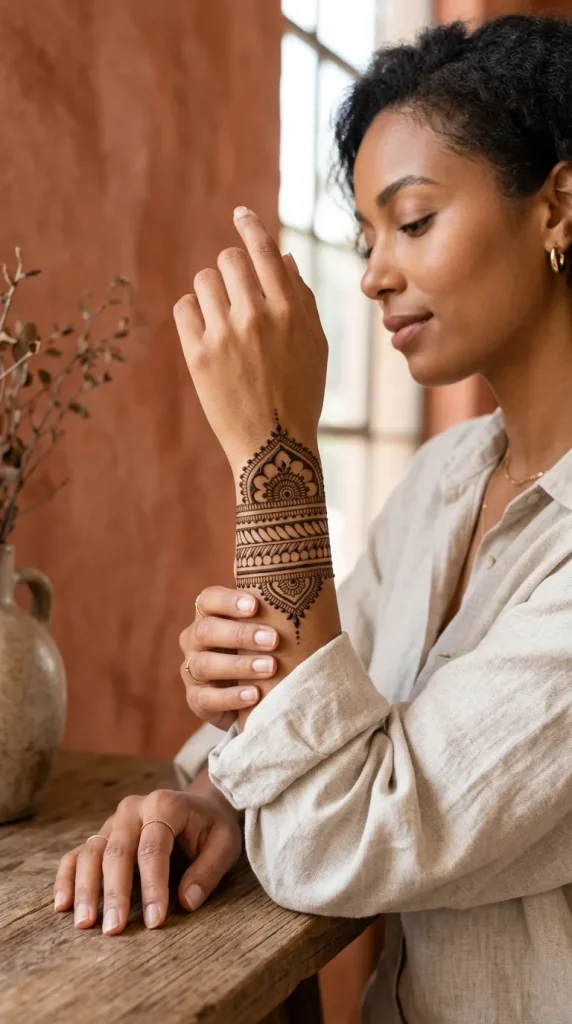
This avant-garde approach completely ignores the fingers and palms, concentrating a singular, high-impact decorative band strictly around the wrist or ankle, closely resembling a permanent laser-cut cuff or an artistic tattoo band.
- Who It Suits Best: Working professionals who need a style that can easily be hidden under a watch or long sleeve at the office, or anyone loving clean, structural art.
- Styling Tips: Incorporate bold negative space inside the cuff design to give it a sharp, modern graphic edge.
- Benefits: Minimal restriction of hand movement during the drying phase, zero interference with daily tasks, and incredibly sleek presentation.
Pro Tips for Achieving a Rich, Dark Stain Naturally
The longevity and deep color of your henna art depend heavily on how you handle the paste during and immediately after application.
💡 The Golden Rules of Organic Stain Care
- Say Absolute No to Chemicals: Avoid any cone that promises a dark stain in “just 5 minutes.” These contain dangerous adulterants like PPD (para-phenylenediamine) and solvents that can cause severe allergic reactions. Real, organic henna requires time, warmth, and patience to release its natural lawsone dye molecules safely.
- The Sugar-Lemon Seal: Once your design begins to dry slightly, gently dab a mixture of warm lemon juice and white sugar over the pattern using a cotton ball. The sugar keeps the paste sticky and adhered to the skin, while the acidity keeps the dye active.
- Embrace the Heat: Before removing the dry paste, run your hands carefully over the steam of boiling water infused with a few cloves, or wrap them loosely in medical tape to trap your natural body heat. Warmth is the ultimate driver for a rich mahogany stain.
- Scrape, Never Wash: When it is time to remove the paste (ideally after 6 to 12 hours), do not use water. Scrape it off gently using a blunt butter knife, a loyalty card, or coconut oil. Keep the area entirely away from water for the first 24 hours while the color oxidizes from bright orange to deep brown.
Common Mistakes to Avoid to Protect Your Design
To prevent your beautiful pattern from smudging or fading prematurely, steer clear of these frequent pitfalls:
- Waxing or Shaving After Application: Hair removal processes exfoliate the top layer of skin cells, taking your beautiful stain right along with them. Always complete all shaving, waxing, and manicures before your henna session.
- Using a Hairdryer to Speed Up Drying: Forcing hot air directly onto wet paste can cause the patterns to crack, lifting the lines right off your skin before the dye has a chance to bind to your skin cells. Let it air-dry naturally.
- Applying Heavy Synthetic Lotions Pre-Application: Barrier creams, body oils, and chemical sunscreens block the natural dye from penetrating your skin evenly. Wash your hands thoroughly with plain soap and water right before your artist begins.
Frequently Asked Questions (FAQs)
1. How long does a natural henna stain typically last?
A natural stain generally lasts between 1 to 3 weeks. Longevity depends entirely on your body chemistry, where the design is placed (palms stain darkest and last longer due to skin thickness), and how frequently the area is scrubbed with harsh soaps or hot water.
2. Why does my fresh henna look bright orange at first?
Do not panic! When natural paste is first removed, the underlying stain will always appear a bright, neon pumpkin orange. This is completely normal behavior for organic lawsone dye. Over the next 24 to 48 hours, exposure to the air causes the stain to oxidize, gradually deepening into a rich, beautiful reddish-brown or mahogany hue.
3. Can I apply henna safely during pregnancy?
Yes, provided you use 100% pure, organic henna paste mixed strictly with safe essential oils like lavender. Avoid cones containing hidden chemicals, artificial colorants, or high-potency “black henna” completely. Always consult with your healthcare provider before trying body art during pregnancy.
4. How can I safely speed up the removal of a fading design?
When your design begins to look patchy after a couple of weeks, you can accelerate the natural fading process gently. Soak your hands in warm water mixed with Epsom salts, apply a rich layer of olive oil or coconut oil, and exfoliate the skin gently using a soft washcloth or a mild body scrub.
In Conclusion: Ready to Adorn Your Hands?
Henna art is so much more than a fleeting fashion trend—it is a beautiful, living celebration of cultural history, mindfulness, and artistic connection. Whether you choose the regal symmetry of a Royal Rajasthani mesh pattern or the striking simplicity of a minimalist mandala, this ancient medium allows you to carry an organic piece of living art right on your skin.
By choosing natural, chemical-free cones, respecting the slow oxidation process, and treating your skin with gentle care, you ensure a gorgeous, rich results that honors this timeless tradition beautifully.
Ready to experience this therapeutic art form yourself? Find an experienced professional artist who mixes their own fresh, organic paste, select a design style that speaks directly to your personal aesthetic, and enjoy the beautiful, aromatic journey of your next body art experience!