Looking for your next ink inspiration? Explore 10 unique tattoo outline drawing ideas, expert placement tips, and vital mistakes to avoid for crisp linework.
tattoo outline drawing ideas, fine line tattoo design, minimalist flash art, tattoo linework template, geometric stencil concepts
Finding the perfect concept for your next permanent body modification can feel completely overwhelming. You scroll mindlessly through endless online portfolios, yet everything starts to look identical, over-shaded, or cluttered. The pressure to choose something meaningful, clean, and visually timeless frequently results in creative paralysis, leaving you stuck with empty skin and a restless imagination.
The solution lies in stripping the art form down to its purest, most powerful state: pure linework. Embracing minimalist tattoo outline drawing ideas allows you to bypass heavy color saturation and complex shading gradients. This focus honors the core form, composition, and kinetic movement of the human physique. It leaves you with an elegant, clear, and high-contrast aesthetic that ages beautifully over decades.
In this definitive creative resource, we will break down ten distinct design frameworks for minimalist line concepts. We’ll examine the technical aspects of structural line weights, explore professional design choices, and look at the best body placement maps to guarantee your final ink remains sharp, crisp, and striking for a lifetime.
Comparing Tattoo Outline Design Frameworks
Before selecting a design concept, it is vital to understand the structural demands, time commitment, and healing properties associated with different styles of linework. The table below outlines these key technical factors:
| Design Framework Style | Avg. Studio Session Time | Technical Difficulty Scale | Long-Term Maintenance Need |
| 1. Single-Line Continuous Portrait | 45 – 90 Minutes | Advanced (Zero Room for Error) | Low (Ages Elegantly) |
| 2. Sacred Geometric Mandalas | 2 – 4 Hours | Expert (Requires Perfect Symmetry) | Medium (Fine Lines Need Touch-ups) |
| 3. Botanical Fine Line Wildflowers | 60 – 120 Minutes | Intermediate (Needs Soft Fluidity) | Medium (Requires Sun Protection) |
| 4. Celestial Constellations & Planets | 30 – 60 Minutes | Beginner to Intermediate | Low (Minimal Inking Depth) |
| 5. Neo-Traditional High-Contrast | 1.5 – 3 Hours | Intermediate (Uses Varied Weights) | Very Low (Highly Durable) |
| 6. Architectural Scale Cityscapes | 2 – 4 Hours | Advanced (Demands Flawless Perspective) | Medium (Tiny Details Merge with Age) |
| 7. Surrealist Abstract Silhouette | 45 – 75 Minutes | Beginner (Highly Forgiving Shape) | Low (Simple Maintenance) |
| 8. Minimalist Mythological Deities | 1 – 2 Hours | Intermediate (Requires Proportions) | Low (Strong Structural Lines) |
| 9. Anatomical Micro-Hearts & Botany | 60 – 90 Minutes | Advanced (Intricate Line Density) | High (Needs Crisp Lines) |
| 10. Typographic Typography & Runes | 30 – 45 Minutes | Intermediate (Requires Steady Hand) | Low (Classic and Durable) |
10 Creative Tattoo Outline Drawing Ideas
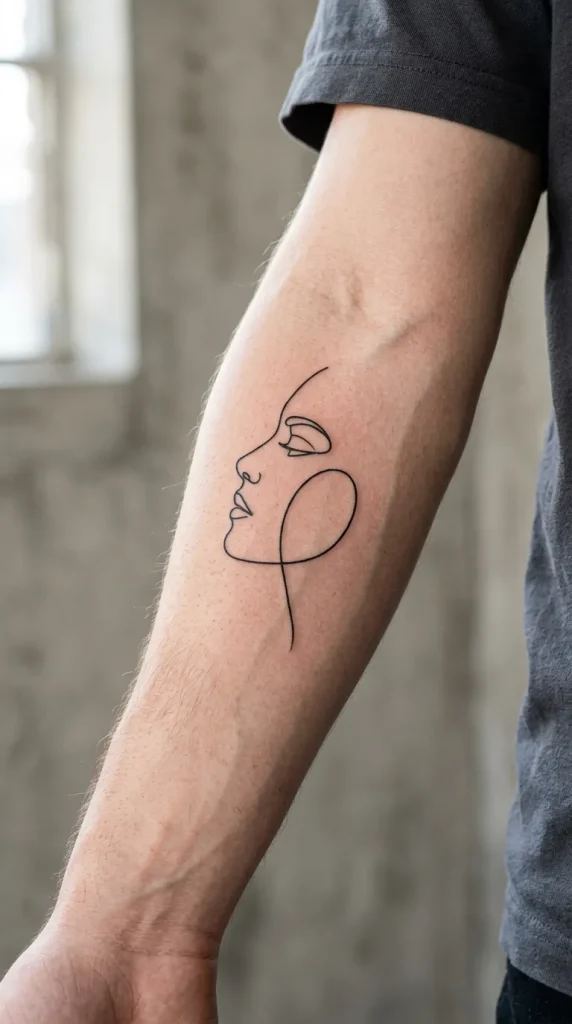
1. Single-Line Continuous Portrait
This design utilizes one unbroken, flowing line to trace the profile or front-facing composition of a human face. The needle never leaves the skin pattern conceptually, creating an abstract, deeply expressive piece where negative space defines the jawline, eyes, and lips.
- Who It Suits Best: Art enthusiasts, minimalists, and individuals seeking an elegant, intellectual design that interacts beautifully with the body’s natural movement.
- Placement & Execution Tips: Works perfectly on flat canvases like the inner forearm, back of the calf, or upper shoulder blade. Avoid placing it over joints where skin bending distorts lines.
- Key Benefits: Quick application time reduces skin trauma, resulting in a swift, painless healing cycle with almost no peeling or scabbing.
2. Sacred Geometric Mandalas
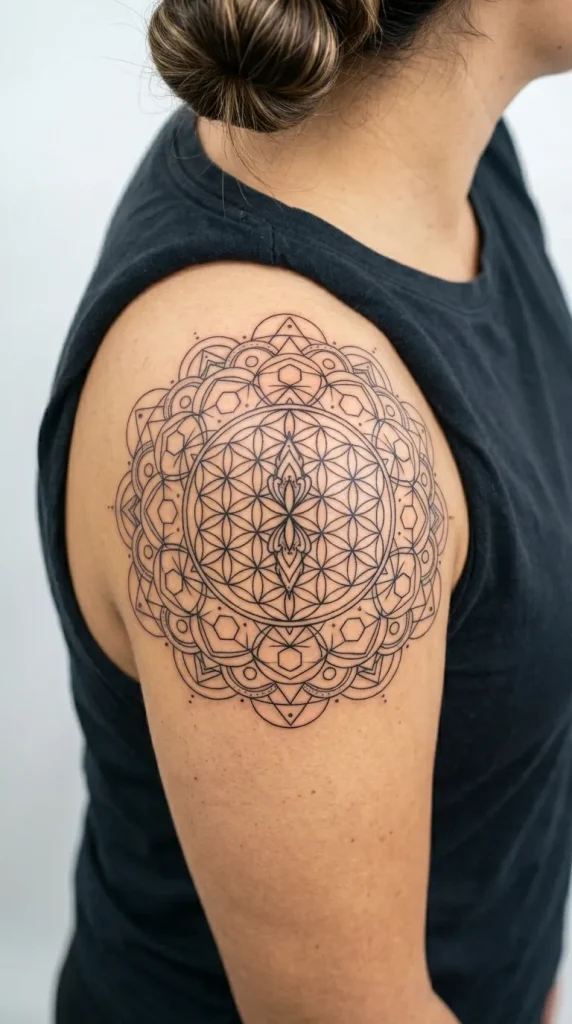
Centered on flawless symmetry and repeating structural lines, this style features concentric circles, crisp triangles, and complex vector nodes. It creates an intricate pattern that mimics cosmic order and sacred architecture.
- Who It Suits Best: People who value spiritual symmetry, structural balance, and high-impact visual geometry that catches the eye from across a room.
- Placement & Execution Tips: Best suited for naturally rounded body areas like the elbow cap, shoulder curve, or knee. Ensure your artist is an expert in technical alignment.
- Key Benefits: Highly scalable concept that can expand into a larger sleeve pattern or chest piece over time.
3. Botanical Fine Line Wildflowers
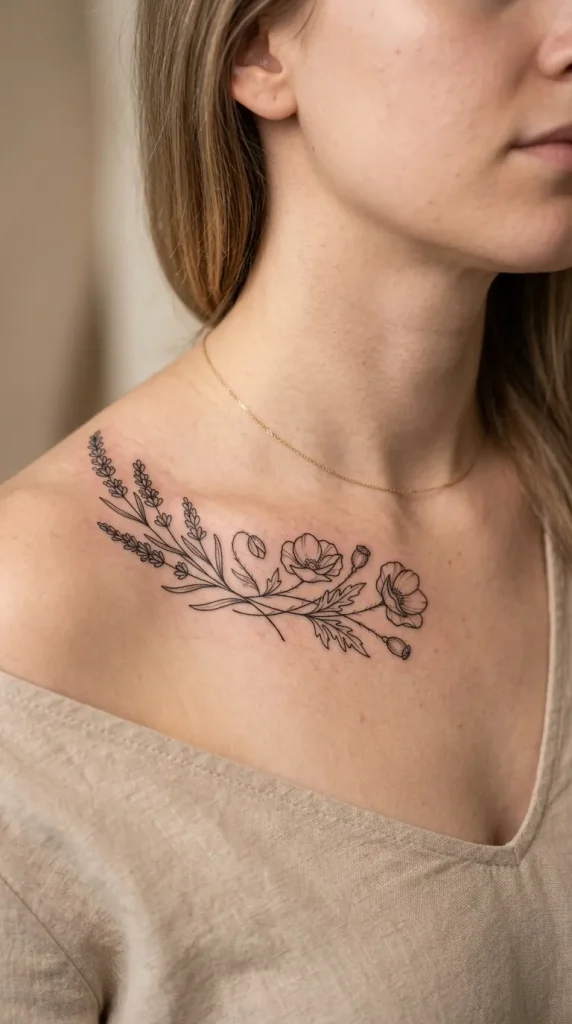
Using delicate needle groupings, this approach captures the organic, asymmetrical beauty of native flora. It renders poppies, ferns, lavender, or eucalyptus branches with whisper-thin, elegant strokes.
- Who It Suits Best: Nature lovers, collectors of fine-line aesthetics, and anyone seeking a soft, organic design that flows gracefully along the body’s natural curves.
- Placement & Execution Tips: Looks stunning when wrapped gently around the collarbone, trailing down the spine, or arching over the hip bone.
- Key Benefits: Soft lines blend seamlessly with skin texture, giving the artwork a subtle, delicate appearance that looks like hand-drawn graphite.
4. Celestial Constellations & Planets
This concept uses simple, bold points connected by razor-thin vector lines to map out zodiac alignments, lunar cycles, or orbit paths. It offers an elegant, uncluttered take on cosmic themes.
- Who It Suits Best: Star-gazers, astrology practitioners, and first-time collectors wanting a meaningful piece with a minimal, subtle footprint.
- Placement & Execution Tips: Ideal for highly delicate, small areas like the side of the wrist, behind the ankle bone, or along the rib cage.
- Key Benefits: Extremely fast to apply, making it budget-friendly and perfect for clients with a lower pain tolerance.

5. Neo-Traditional High-Contrast Outlines
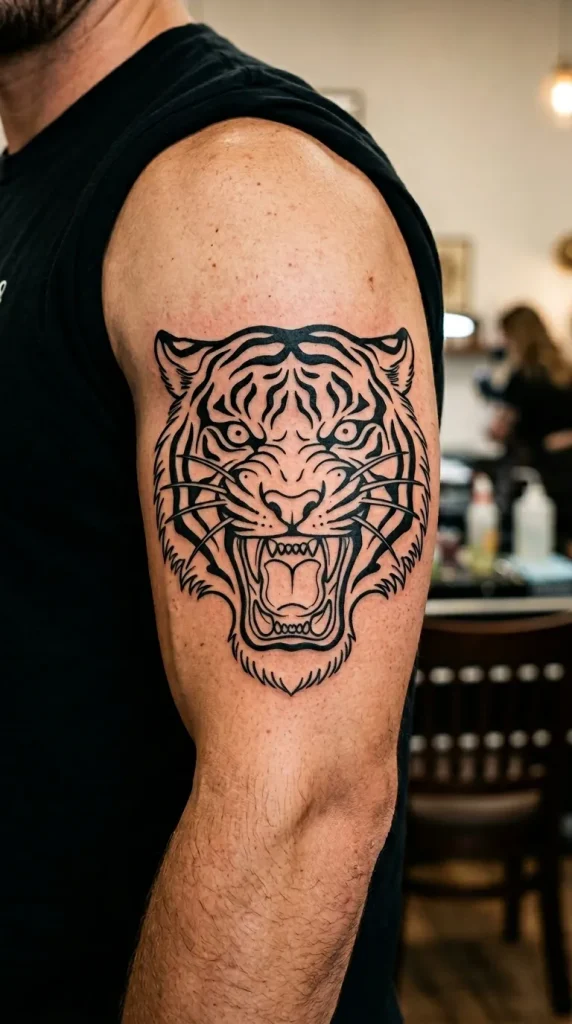
Featuring heavy, thick line weights with distinct graphic profiles, this style presents classic motifs—like tigers, daggers, serpents, or roses—without any internal color fill or shading gradients.
- Who It Suits Best: Fans of traditional street shop flash art who want a clean, high-contrast look that stands out boldly on any skin tone.
- Placement & Execution Tips: Exceptional for high-visibility spots like the outer bicep, hand, thigh, or central shin.
- Key Benefits: Outstanding longevity. Thick, saturated outlines resist fading, blurring, or blowing out far better than other styles over the years.
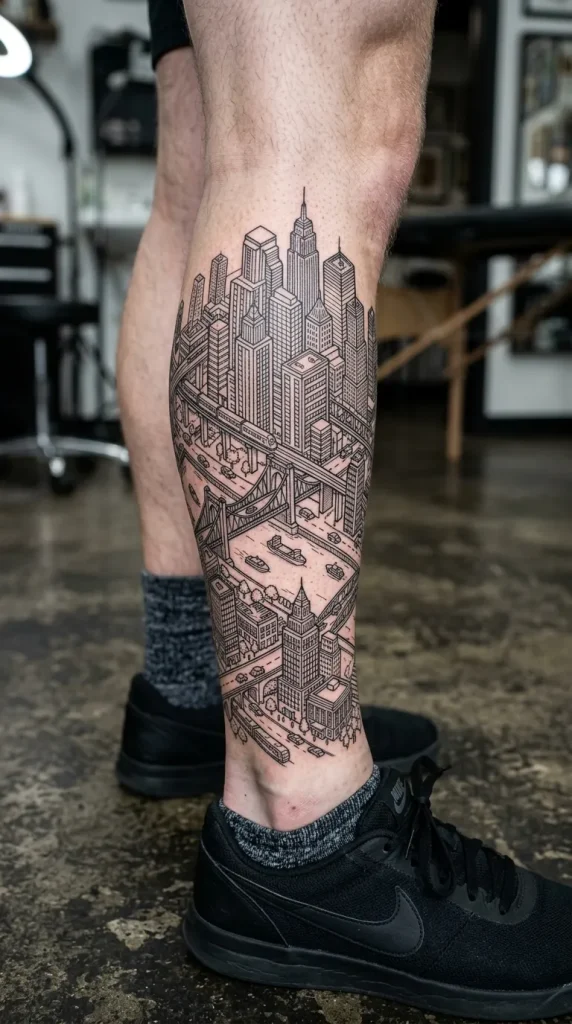
6. Architectural Scale Cityscapes
This style translates complex industrial forms, gothic window frames, suspension bridges, or personal hometown horizons into precise, hard-edged isometric line illustrations.
- Who It Suits Best: Urban travelers, architecture buffs, and anyone wanting to carry a permanent homage to a specific, meaningful geographical place.
- Placement & Execution Tips: Requires an expansive, flat surface. The inner forearm or upper back provides the room needed to keep lines perfectly straight.
- Key Benefits: The balance of sharp vertical angles and open negative space creates a sophisticated look that mirrors technical blueprint art.
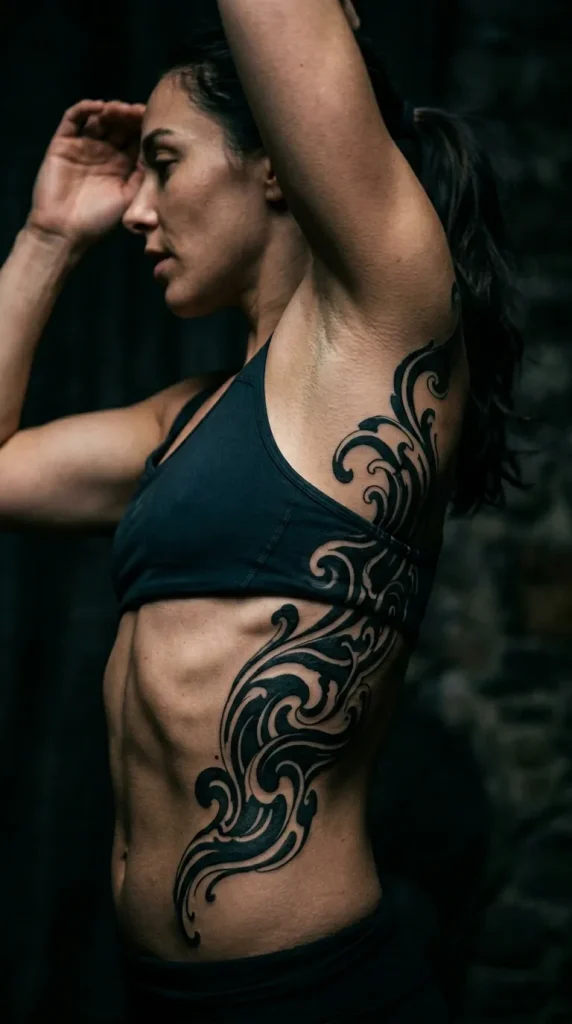
7. Surrealist Abstract Silhouette Wave
Blending oceanic curves with human forms, this fluid design uses sweeping, dynamic line currents to evoke a sense of deep emotional transition, movement, and psychological mystery.
- Who It Suits Best: Creative souls, writers, and swimmers who prefer poetic, abstract imagery over literal, rigid representations.
- Placement & Execution Tips: Follow the body’s natural lines of movement. Place it along the oblique muscles, wrapping around the ribs, or sweeping down the outer thigh.
- Key Benefits: Its abstract style makes it highly adaptable to your specific anatomy, accentuating and flattering your natural physique.
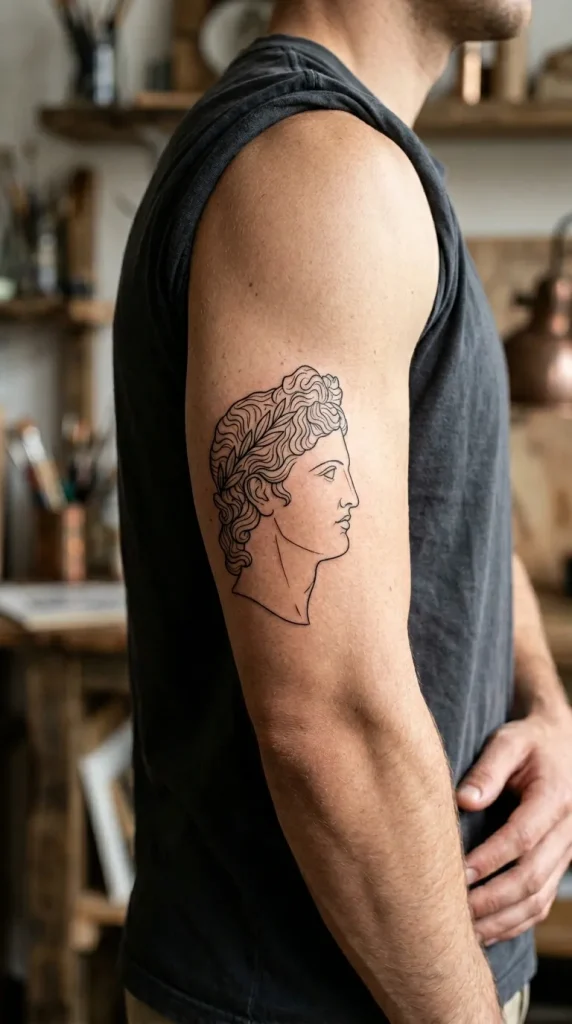
8. Minimalist Mythological Deities
This approach captures the iconic silhouettes of ancient gods, mythological figures, or classical marble sculptures using clean, simple outlines that focus on profile lines and character postures.
- Who It Suits Best: History buffs, fans of classical mythology, and individuals who want a large, meaningful design without the long sessions required for realism shading.
- Placement & Execution Tips: Works beautifully on spacious canvases like the tricep, outer calf, or central chest area.
- Key Benefits: Delivers the narrative weight and classical beauty of historical art while remaining clean, understated, and modern.
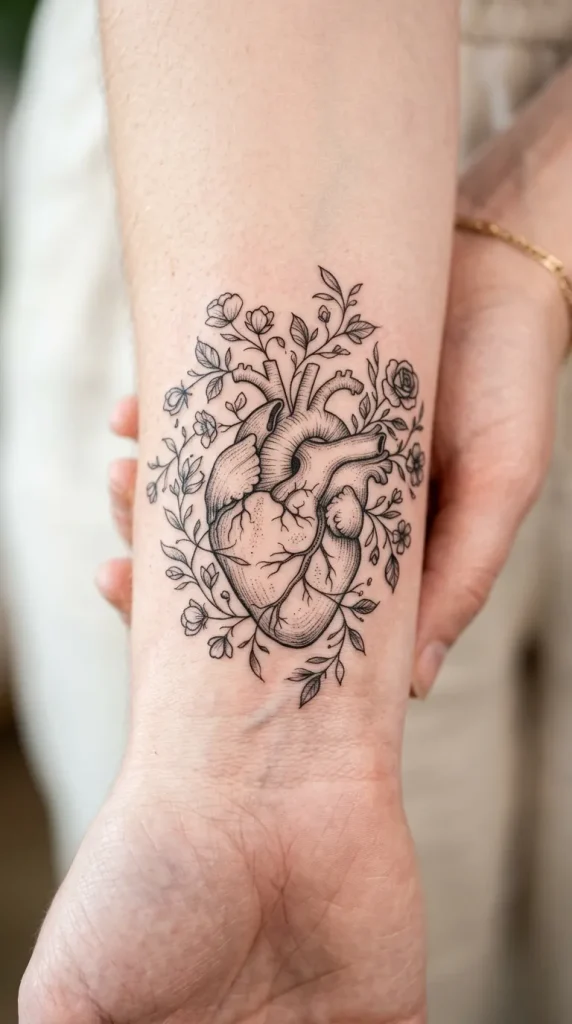
9. Anatomical Micro-Hearts & Botany
This intricate design contrasts precise medical diagrams of human organs with organic vines, roots, or blooming flowers growing straight from the valves and chambers.
- Who It Suits Best: Medical professionals, science lovers, and individuals looking for a deep, symbolic design about personal growth, life, and vulnerability.
- Placement & Execution Tips: Fits beautifully over the inner wrist, the center of the chest, or just above the ankle joint.
- Key Benefits: The mix of technical, scientific lines and soft, organic curves offers a striking visual contrast that sparks conversation.
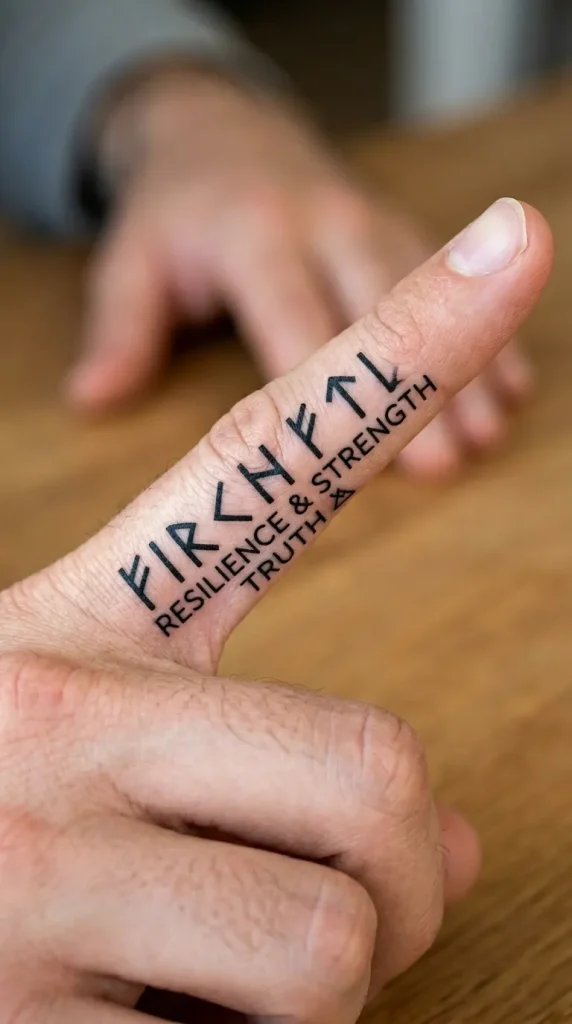
10. Typographic Typography & Runes
This style uses clean, single-pass lines to render stark geometric lettering, ancient Norse runes, or minimalist typewriter fonts without any internal ink filling.
- Who It Suits Best: Poets, literature lovers, or anyone wanting a direct, powerful textual reminder or personal mantra carved into their skin.
- Placement & Execution Tips: Excellent for wrapping around fingers, running down the side of a foot, or resting cleanly below the collarbone line.
- Key Benefits: Highly legible design that is exceptionally easy to scale down to a microscopic size while preserving its clean look.
Expert Pro-Tips for Perfect Linework
- Select a True Line Specialist: Not all artists excel at fine linework. Look through portfolios specifically for straight lines, uniform circle shapes, and clean intersections without any messy overlapping ink dots.
- Insist on High-Contrast Stencils: During the prep work, double-check that your design stencil feels balanced and aligned when you are standing up naturally, rather than sitting down twisted in the artist’s chair.
- Prioritize Moisture Care: Apply an ultra-thin layer of unscented, water-based ointment during the first 72 hours of healing. Heavy petroleum jellies can trap heat and pull fine ink lines right out of the skin.
Critical Mistakes to Avoid
- Going Too Small with Micro Details: Ink naturally spreads beneath the dermis layers over time. If your parallel outline strokes are placed less than 2 millimeters apart, they risk merging into a blurry blob after five to ten years.
- Submitting to Fads without Planning Ahead: Ensure your design choice matches your unique style rather than simply copying temporary social media aesthetic trends.
- Neglecting UV Protection: UV radiation breaks down ink pigments quickly. Always apply SPF 50 sunscreen over your fully healed outlines to prevent line blurring and premature fading.
Frequently Asked Questions
Do tattoo outlines hurt less than fully shaded pieces?
Yes, line tattoos generally cause less overall skin trauma since the artist uses a smaller needle cluster and finishes the session much faster. However, the initial line passes can feel sharp and intense compared to the dull ache of shading.
Can you add color or shading to an outline design later?
Absolutely. Outline-focused tattoos provide an excellent foundation. You can easily return to a studio down the road to introduce watercolor washes, traditional color packing, or black-and-grey dotwork shading.
How do I prevent my fine line tattoo outlines from blowing out?
Blowouts happen when an inexperienced artist presses too deep, injecting ink into the fat layers below the skin. You can avoid this entirely by vetting your artist carefully and choosing areas with thick skin, avoiding thin zones like the inner fingers or ankles.
Taking the Next Step into the Chair
A great tattoo begins with a commitment to clean, intentional design. By focusing on pure linework and open negative space, you create a timeless piece of body art that honors your personal story without clutter or distraction. Take your favorite concept from this guide, find an experienced line artist in your area, and schedule a consultation to bring your vision to life safely and beautifully.