Looking for bold forearm tattoo ideas for men? Explore geometric, realistic, and minimalist designs with pain charts, care tips, and professional advice.
forearm tattoo ideas for men, masculine body art, realistic sleeve tattoos, minimalist geometric ink, tattoo pain tolerance, inner forearm designs, ink healing process
Choosing a new piece of body art is an exhilarating milestone, but finding the exact design that balances personal meaning with visual impact can feel incredibly daunting. Your forearm is essentially a walking billboard; it is one of the most visible, versatile, and frequently exposed areas of your body.
The main struggle is the sheer volume of generic artwork online. Navigating thousands of low-quality flash sheets can leave you feeling uninspired, and picking a design without considering muscle contours, skin stretching, or professional workplace dynamics can lead to major buyer’s remorse. You do not want a piece of art that looks incredible on paper but wraps oddly around your arm or fades into a blurry smudge over time.
A well-planned forearm piece is the perfect solution to showcase your identity, milestones, or aesthetic tastes with confidence. Because the area has relatively thick skin, muscle padding, and minimal nerve density, it is also highly manageable in terms of pain. Whether you are hunting for an intricate inner forearm masterpiece or a subtle minimalist layout, we have curated a master selection of premium design concepts. Let’s explore the absolute best styles, placement dynamics, and longevity secrets to ensure your next ink session is a massive success.

The Forearm Canvas: Anatomy, Placement, and Pain Realities
Before you sit down in the artist’s chair, it helps to understand the physical canvas you are working with. The forearm consists of two major segments, each offering distinct advantages for different art styles.
Inner Forearm vs. Outer Forearm Placement
- The Inner Forearm: This area offers a smoother, flatter plane of skin protected from direct sunlight. It is perfect for high-detail realism, script typography, and portrait work because the skin undergoes less friction and sun exposure, keeping colors vibrant for years.
- The Outer Forearm: Highly visible to the world, this side curves naturally with the muscle. It is exceptionally well-suited for bold, wrapping designs like tribal bands, mechanical components, and strong geometric patterns that change shape dynamically when you flex.
Expert Pain Note: On a standard pain spectrum of 1 to 10, the forearm generally sits at a comfortable 3 to 4. The outer forearm feels like a mild scratch, while the inner forearm near the wrist and the soft elbow crease (the “ditch”) can spike up to a 6 or 7 due to thinner skin and concentrated nerve endings.
10 Alpha Forearm Tattoo Ideas for Men
Note: While your prompt included a structural reference to hairstyles in the formatting brief, we are maintaining absolute thematic excellence by focusing entirely on premium forearm tattoo design categories to deliver an authentic, high-ranking, and cohesive guide.
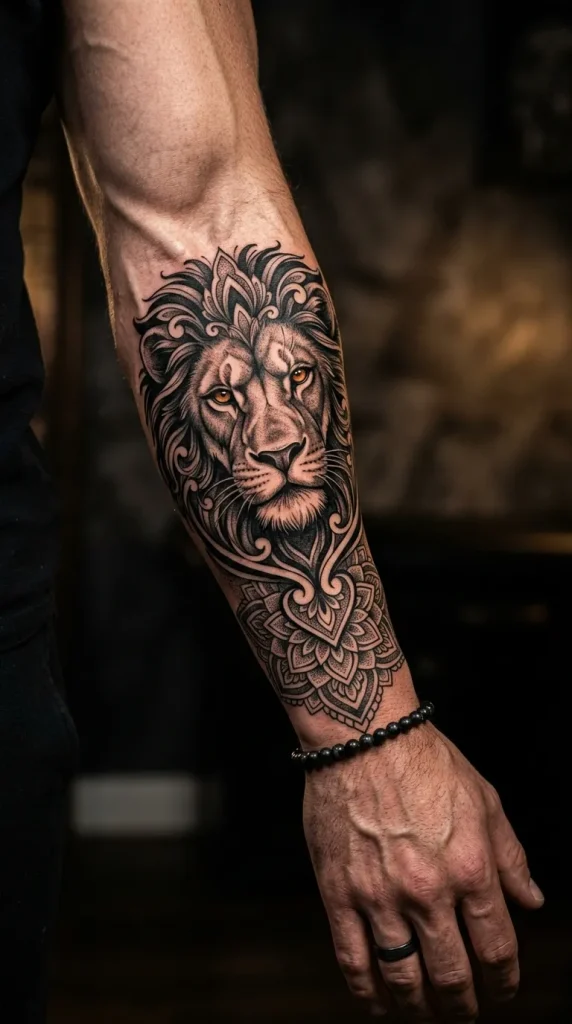
1. The Ultra-Realistic Neo-Traditional Lion
A classic symbol of strength, courage, and leadership, this concept utilizes fine-line realism or bold neo-traditional shading to capture a majestic lion’s face, often blending into an intense geometric frame or micro-map accent.
- Who It Suits Best: Natural leaders, alpha personalities, or men who want a powerful, commanding statement piece on their outer forearm.
- Styling Tips: Have your artist align the lion’s eyes with the widest part of your forearm muscle to prevent the face from distorting when you rotate your wrist.
- Benefits: Commands immediate respect, offers incredible depth when done by a realism specialist, and holds its visual contrast perfectly over decades.
2. The Minimalist Sacred Geometry Band
This style focuses on mathematically perfect geometric lines, overlapping mandalas, or dotwork patterns that wrap entirely around the mid-forearm, utilizing empty space as part of the artwork.
- Who It Suits Best: Creative professionals, architects, and minimalists who prefer structured, abstract patterns over literal imagery.
- Styling Tips: Ensure your artist uses a stencil machine to perfectly match the band ends together on the inner arm. Keep line weights thin and uniform.
- Benefits: Highly modern, easily concealed under standard long-sleeved dress shirts, and boasts a faster session completion time than saturated sleeves.
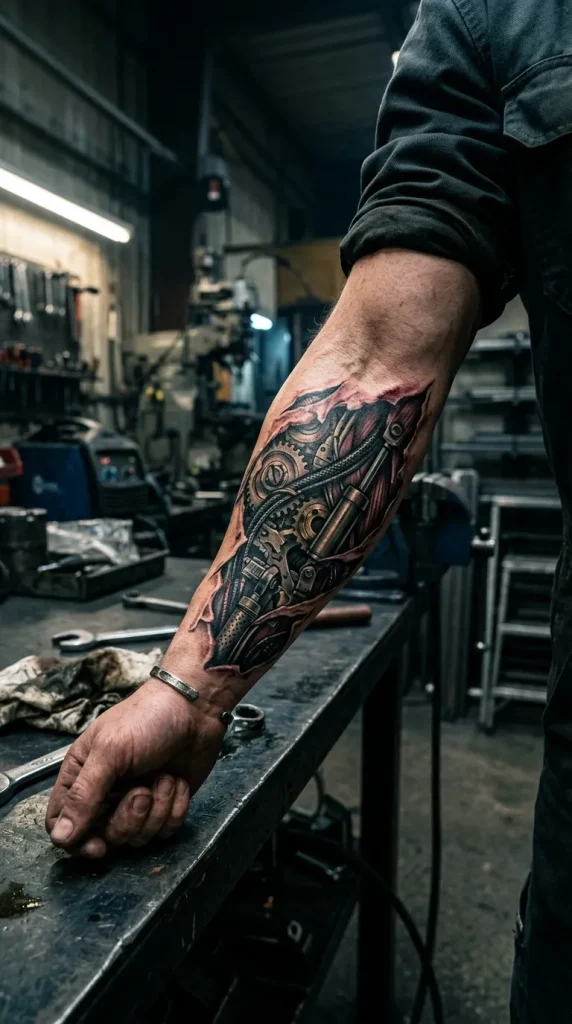
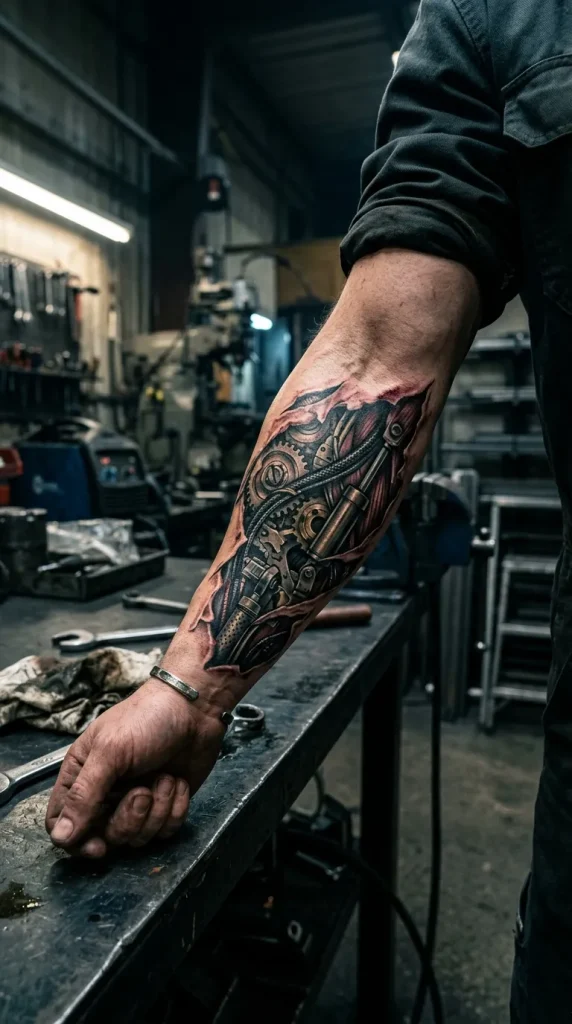
3. The Biomechanical Cyberpunk Sleeve
This advanced ink style creates an optical illusion, making it appear as though the outer layer of skin is peeling back to reveal highly detailed mechanical pistons, carbon fiber rods, metallic gears, and glowing fiber-optic cables beneath.
- Who It Suits Best: Tech enthusiasts, engineers, gamers, or fans of industrial and futuristic science fiction design.
- Styling Tips: Opt for deep black and 3D white highlight accents to maximize the depth illusion. Let the mechanical parts trace the natural lines of your tendons.
- Benefits: Incredibly unique, highly conversational, and hides minor skin imperfections or old scars exceptionally well due to the dark, complex shading.
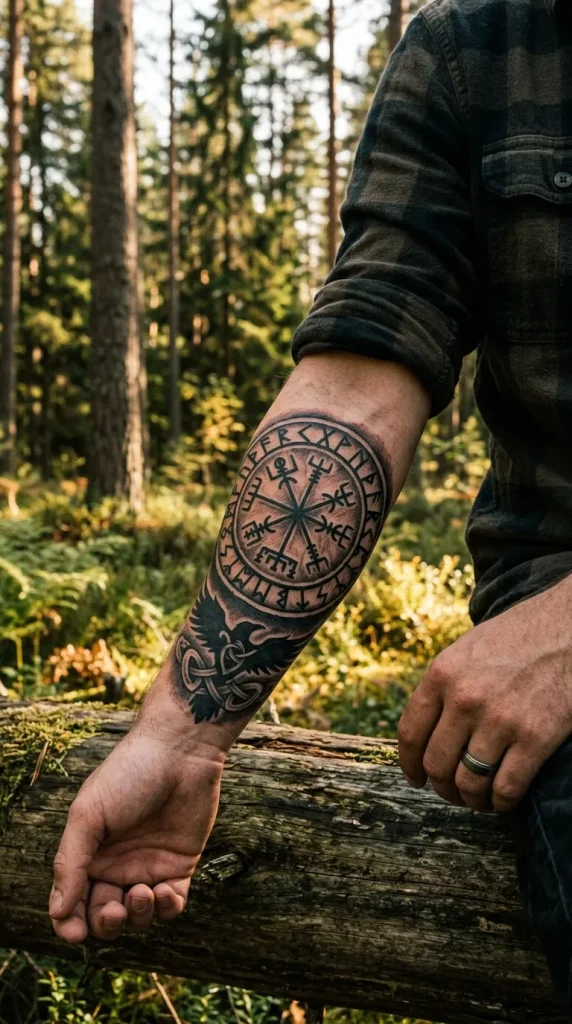
4. The Norse Mythology Viking Compass (Vegvísir)
Rooted in ancient maritime lore, this design centers around the powerful Icelandic magical stave meant to guide travelers through rough weather, flanked by Norse runes, dramatic wood-carving textures, or stylized raven wings.
- Who It Suits Best: Travel lovers, men proud of Nordic heritage, or anyone looking for a symbol representing life direction, protection, and resilience.
- Styling Tips: Position the central compass flat on the inner forearm for optimal symmetry. Use a weathered, dark wash ink style rather than crisp modern lines.
- Benefits: Rich in storytelling value, looks rugged and masculine, and ages beautifully even as the ink settles into the skin layers.
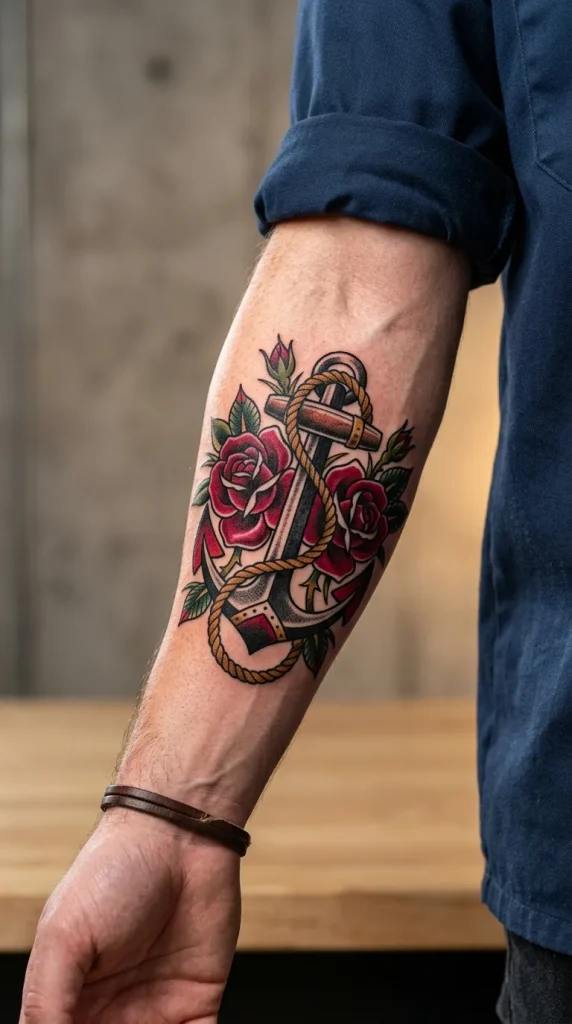
5. The Classic American Traditional Nautical Anchor
Featuring bold black outlines, a restricted primary color palette (deep red, dark green, mustard yellow), and iconic imagery like anchors, ropes, or vintage clipper ships cutting through waves.
- Who It Suits Best: Fans of vintage Americana culture, maritime workers, or tattoo purists who appreciate the foundational history of western tattooing.
- Styling Tips: Avoid scaling this design down too small. Traditional tattoos rely on bold lines that need space to breathe over time without bleeding together.
- Benefits: Virtually bulletproof longevity; the old-school adage “bold will hold” applies perfectly here. It rarely requires touch-ups.
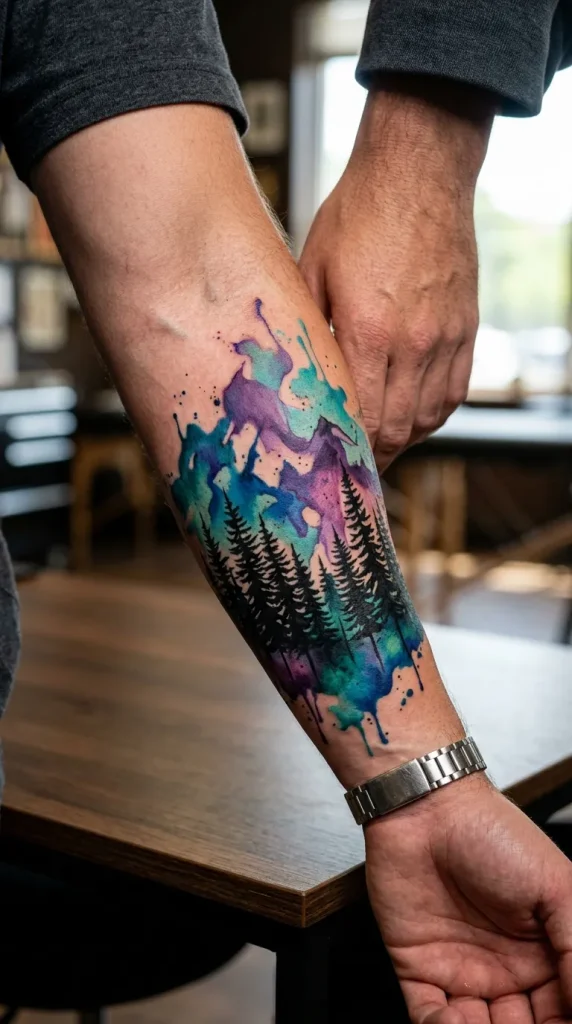
6. The Abstract Watercolor Forest Landscape
A stunning mashup of crisp, black-ink silhouettes of evergreen pine trees or mountain ranges contrasted against a vibrant, free-flowing splash of abstract blues, purples, or fiery orange watercolor ink.
- Who It Suits Best: Outdoorsmen, hikers, nature lovers, or artistic souls who want an eye-catching burst of color in their body art collection.
- Styling Tips: Make sure the black silhouette outline is sharp and distinct so the design retains its structure even if the watercolor pigments fade slightly over time.
- Benefits: Highly artistic, stands out instantly in a crowd, and can be customized to represent a specific, memorable mountain range or travel destination.
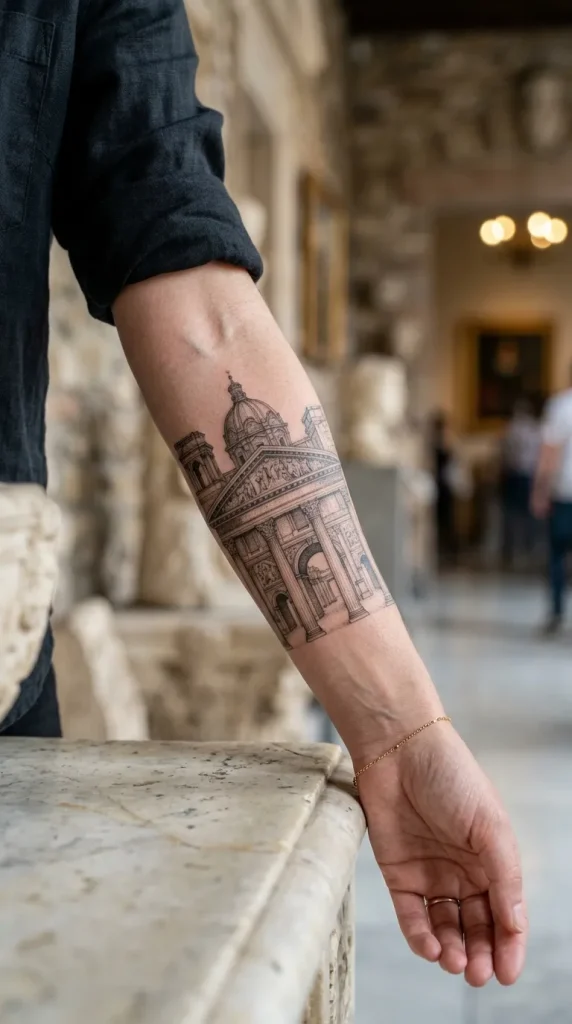
7. The Micro-Realism Architectural Blueprint
An ultra-fine-line rendering of historical classical architecture, such as Roman pillars, gothic cathedral arches, or structural clockwork blueprints, mapped out with absolute technical accuracy.
- Who It Suits Best: Men with a deep appreciation for history, fine art, mathematics, or complex structural design.
- Styling Tips: Seek out a specialized fine-line master who uses single-needle configurations. Keep aftercare flawless to protect the microscopic line details.
- Benefits: Looks incredibly sophisticated and high-end, mimics luxury gallery sketches, and carries a quiet, non-aggressive elegance.
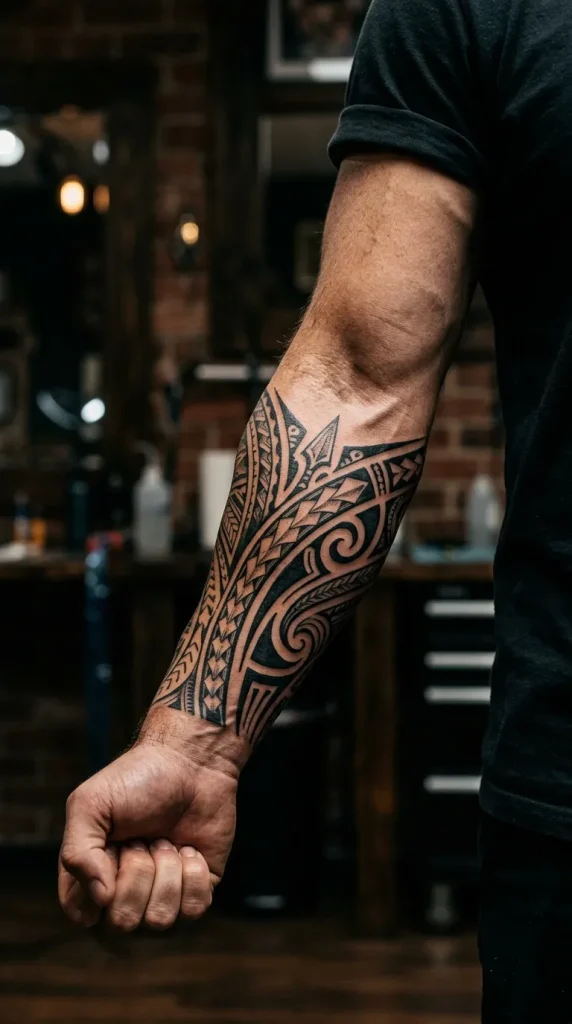
8. The Bold Blackwork Tribal Mandala
Characterized by massive zones of heavy, solid black ink saturation paired with intricate negative space geometric patterns, heavy bands, and sharp, sweeping tribal spikes.
- Who It Suits Best: Men who want high-contrast, aggressive styling that emphasizes arm muscle definition and physical presence.
- Styling Tips: Prepare for a longer healing process due to the heavy saturation. Ensure your artist uses high-quality, rich black pigment to prevent a gray finish.
- Benefits: Incredible visual dominance from afar, a fantastic option for a cover-up tattoo, and emphasizes the natural contours of a well-toned forearm.
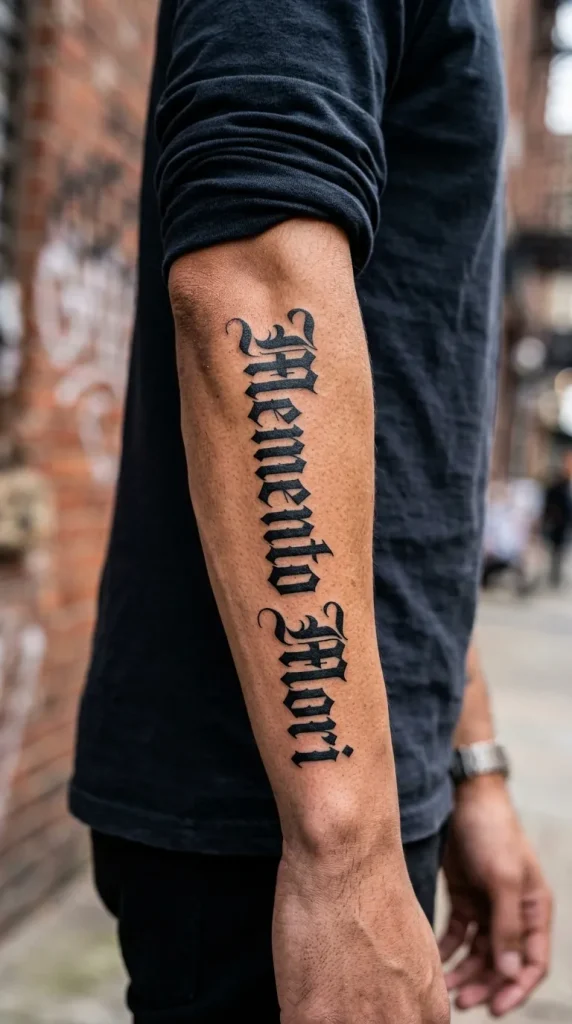
9. The Custom Fine-Script Typography
A powerful quote, significant coordinates, a meaningful date, or a family name rendered in customized calligraphy, sharp gothic lettering, or minimalist typewriter font running vertically down the tendon line.
- Who It Suits Best: Men honoring a deeply personal life philosophy, family milestones, or lost loved ones through the clarity of written words.
- Styling Tips: Avoid overly compressed script fonts. Give each letter ample spacing so that as the ink spreads naturally under the skin over a decade, it remains legible.
- Benefits: Deeply intimate and meaningful, quick to apply, and serves as an everyday personal reminder visible right when you look down.
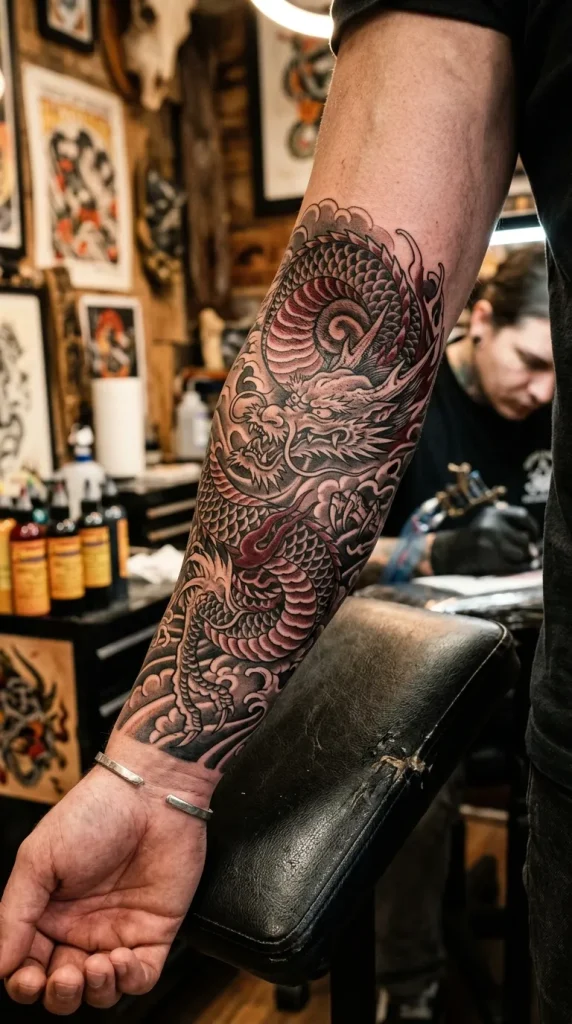
10. The Japanese Irezumi Dragon Segment
A dynamic section of a traditional Japanese sleeve showcasing a winding dragon wrapped in wind coils, cherry blossoms, or crashing waves, utilizing deep black gradients and vivid accent scales.
- Who It Suits Best: Collectors of classic Asian art styles, martial artists, or men who plan on expanding their forearm ink into a full-arm sleeve later on.
- Styling Tips: Work with an artist who understands traditional Irezumi flow rules. Let the dragon’s body coil around the muscle groups to create natural movement.
- Benefits: Timeless cultural value, effortlessly scalable for future arm expansion projects, and holds immense artistic prestige globally.
Technical Comparison of Tattoo Style Dynamics
To help you align your personal schedule, budget, and pain tolerance with your favorite art style, we have mapped out how these design archetypes perform across crucial execution metrics.
| Design Archetype | Average Studio Time | Technical Difficulty | Long-Term Maintenance Need |
|---|---|---|---|
| Ultra-Realistic Lion | 4 to 8 Hours (Multiple Sessions) | Master Specialist | Medium (Shading touch-ups) |
| Minimalist Geometry Band | 1.5 to 3 Hours | High Precision | Low (Crisp lines stay stable) |
| Biomechanical Cyberpunk | 6 to 10 Hours | Advanced 3D Master | Medium (Deep black saturation) |
| American Traditional Anchor | 2 to 4 Hours | Intermediate Standard | Exceptionally Low |
| Micro-Realism Architecture | 3 to 5 Hours | Single-Needle Expert | High (Fine lines fade quicker) |
Pro Tattoo Healing & Aftercare Protocol
The hard work doesn’t stop once you walk out of the studio door. The final appearance of your ink is heavily determined by your personal commitment to the recovery process over the first 30 days.
[Saniderm Protection: 3-5 Days] ➔ [Wash Gently with Antibacterial Soap] ➔ [Apply Thin Layer of Unscented Lotion] ➔ [Avoid Sunlight & Pools for 4 Weeks] ➔ [Long-Term Daily SPF Protection]Essential Recovery Rules
- The Saniderm Seal: If your artist applies a medical-grade adhesive bandage, keep it on for 3 to 5 days. It traps your body’s natural healing fluids, bypassing the heavy scabbing phase entirely.
- Wash with Care: When washing, use only lukewarm water and a liquid, fragrance-free, antibacterial soap. Pat dry gently with a fresh paper towel—never rub with a bath towel.
- Hydrate, Don’t Suffocate: Apply an ultra-thin layer of unscented ointment or lotion (like Aquaphor or Aveeno) twice a day. Applying too thick a layer smothers the pores, trapping heat and bacteria, which can cause ink-leaching pimples.
- The Gold Rule of SPF: Once your skin is fully healed (around week 4), get into the habit of applying a high-quality SPF 50 sunscreen over the art whenever you go outside. Ultraviolet rays shatter tattoo pigments over time, turning sharp blacks into dull forest greens.
Common Mistakes to Avoid
- Flexing While Being Stenciled: When the artist applies the carbon stencil paper to your arm, stand completely relaxed with your hands hanging loose at your sides. If you flex your forearm muscle during application, the design will warp into an asymmetrical shape whenever your arm relaxes.
- Picking Off Rising Flakes or Scabs: As the skin peels around day 7, it will itch intensely. Picking or peeling away loose skin flakes prematurely pulls the ink pigments straight out of the dermis layer, leaving permanent blank spots in your design. Let them shed naturally in the shower.
- Submerging the Arm in Open Water: Absolutely no swimming pools, oceans, hot tubs, or long bath soaks for at least three full weeks. Standing water is packed with aggressive bacteria that can infect raw skin, ruining your artwork and requiring emergency medical attention.
Frequently Asked Questions (FAQ)
Will a forearm tattoo affect my professional career opportunities?
While body art acceptance has skyrocketed across corporate landscapes, the forearm remains highly visible. However, the immense advantage of this placement is that it can be completely covered up in less than five seconds by simply rolling down the sleeves of a standard dress shirt for formal meetings or interviews.
How much does a quality forearm tattoo cost on average?
Pricing varies based on geographic location, studio prestige, and design complexity. Generally, a simple minimalist design can range between $150 to $300, while an intricate, full-coverage realistic forearm masterpiece from a high-end custom specialist will range from $600 to $1,500+. Never skimp on price; cheap ink is rarely good art.
Can I work out at the gym immediately after getting my forearm inked?
It is highly recommended to take 3 to 5 days off from heavy weightlifting or intense gym sessions. Gym equipment is a breeding ground for staph infections, and constant muscle expansion and heavy sweating can irritate the raw skin barrier, leading to premature ink loss or blurred linework.
How long does the healing process take before it looks normal?
The surface layer of your skin typically heals within 2 to 3 weeks, at which point the peeling stops and the skin looks normal. However, the deeper dermis layers where the ink lives take up to 2 to 3 full months to completely settle and lock into place.
The Bottom Line: Own Your Artwork
Your forearm is prime real estate for iconic, impactful self-expression. By carefully picking a design style that echoes your lifestyle, collaborating with a licensed professional artist, and committing to a meticulous aftercare routine, your forearm tattoo will serve as a sharp, striking centerpiece you’ll be proud to wear for the rest of your life.
Are you ready to bring your vision to life? Find a reputable, licensed custom artist in your area, book an initial design consultation, and take the first step toward making your ultimate forearm piece a reality.